Definition
Silk PLA
noun
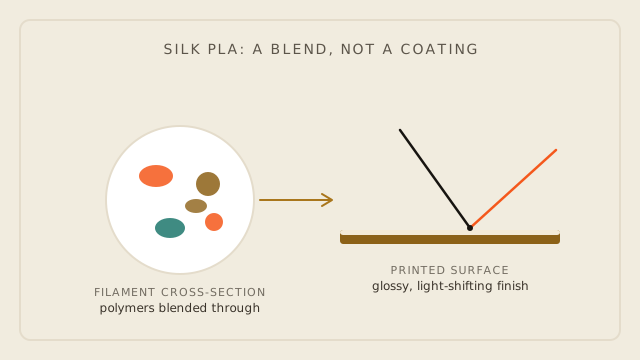
Silk PLA is a PLA filament blended with extra polymers that give the printed surface a glossy, light-shifting finish. It prints like standard PLA but trades some layer strength for its looks.
Why silk PLA looks shiny
The silk effect comes from a multi-polymer blend in the filament, not a coating on top. The blend changes how light reflects off the print, so the surface looks smooth and glossy. Bambu Lab notes that silk PLA trades some Z-axis strength for this finish, so it suits decorative parts better than load-bearing ones.
Related parameters
Surface finish
Glossy, light-shifting
Z-axis strength
Lower than standard PLA
The silk blend weakens layer adhesion.
Drying temperature
40 to 50°C
Drying time
4 to 6h
Print settings
Silk PLA uses the same hotend and bed range as standard PLA, per the Prusament PLA datasheet. Keep the part cooling fan high to hold the glossy surface.
| Setting | Recommended | Why |
|---|---|---|
| Nozzle temperature | 200 to 220 °C | Same band as standard PLA, per Prusament. |
| Bed temperature | 40 to 60 °C | A heated bed helps the first layer stick. |
| Part cooling fan | 100 % | Full cooling keeps the glossy surface crisp. |
| Print speed | 40 to 60 mm/s | Slower speeds hold the shimmer better. |
Common mistakes
Frequently asked
Is silk PLA the same as standard PLA?
Does silk PLA need a special nozzle?
Can I print silk PLA without a heated bed?
Why does my silk PLA look dull?
To pick a brand, see the best silk PLA filament roundup. For the full PLA settings, read the PLA temperature guide or the PLA overview.
Related guides
Related
Sources & methodology
4 citations · reviewed 2026-07-09- 01Bambu Lab PLA Usage Guideaccessed 2026-06-29Tier 1
- 02Prusament PLA Technical Datasheetaccessed 2026-06-29Tier 1
- 03All3DP: 3D Printing Terminology glossaryaccessed 2026-06-29Tier 2
- 04All3DP: All 3D Printing Filament Types Explainedaccessed 2026-06-29Tier 2